Settling into daily life
Finding your words in a new place: everyday conversations for refugees
Starting again in another country brings ordinary questions: where a bus stops, how to collect a child from school, who can arrange a repair. A translation tool can help you handle some of these conversations yourself. The aim is understanding on both sides, with room to pause, ask again and choose human support when it matters.
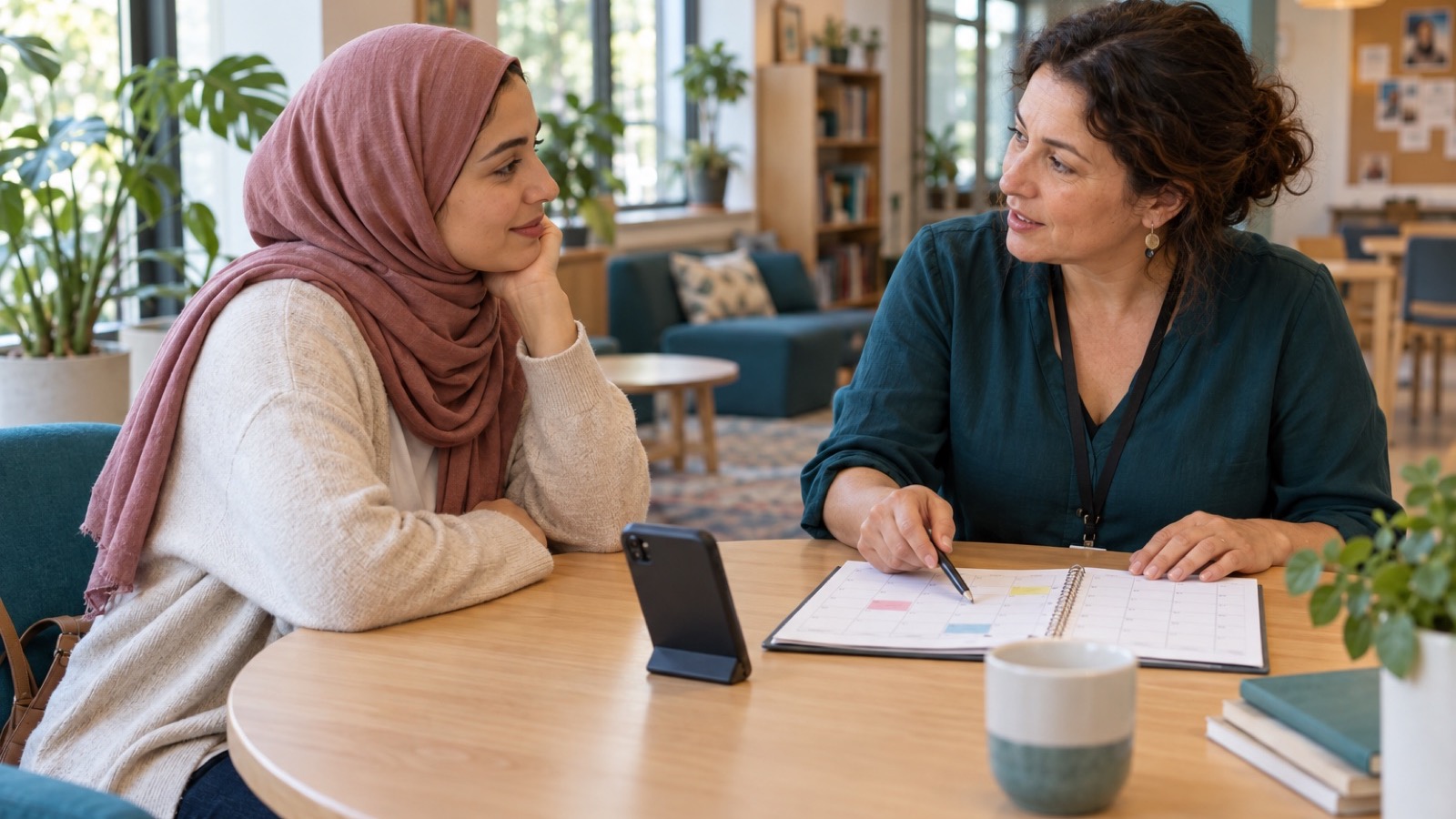
Illustration created for TraduLive; not a photograph of actual users.
A school receptionist explains where to wait. A neighbour asks when a repair worker can visit. At a bus stop, you need to know which side of the road to stand on. These are ordinary exchanges, but a language gap can make each require someone else's help.
Being able to ask your own question matters. So does understanding the answer.
For refugees settling into a new country, language support can make everyday arrangements easier. People bring different languages, skills and preferences; there is no single experience of starting again. The examples below are practical suggestions, not accounts of actual TraduLive users.
- Start with a shared plan
- At the school reception
- Planning a journey
- Making arrangements at home
- Shops and community conversations
- Choose the right support
- Questions
Start with a shared plan
Explain that you would like to use translation, and check that the other person is comfortable with the phone listening. Choose the languages together. Put the phone where it can hear both people and where the text is easy to see. A quieter spot helps; speaking louder does not necessarily make the words clearer.
Try a simple opening: "I would like to ask about the appointment. Can we use translation?" Keep to a single point, allow time to read and invite questions back. If the text looks unexpected, stop and rephrase. You do not have to continue with a tool that is not helping.
At the school reception
A reception conversation might cover the entrance to use, collection arrangements or how to tell the school a child will be absent. Start with the practical question: "Where should I wait when school finishes?" Ask the receptionist to point to the entrance or write the contact details, then repeat your understanding.
A longer discussion about a child's learning, wellbeing or support may need an interpreter arranged through the school. Ask what language support is available before the meeting. A child should not have to carry the responsibility for explaining a difficult adult conversation. Keep questions about sensitive family matters for an appropriate, private setting.
Planning a journey
At a transport desk, show the destination and ask a specific question: "Does this bus stop near this address?" Confirm the direction, where to get off and whether a change is needed. Written place names and a map can support the spoken explanation; similar-sounding stops are easy to confuse.
Before leaving, check mobile data or Wi-Fi and your battery. TraduLive needs an internet connection. Keep the destination address and essential journey details somewhere you can open without translating again. Ask before the vehicle moves, or speak with staff in a safe waiting area, rather than distracting a driver.
Making arrangements at home
Translation can help explain a leaking tap, arrange access for a repair or ask how shared bins are used. Describe what you can observe: "Water is dripping under the sink. When can someone look at it?" Check who will visit, when they are expected and how you will be contacted if plans change.
Confirm the arrangement in writing when possible. A practical maintenance discussion is different from understanding a tenancy contract, a formal notice or a dispute. For documents or decisions with legal consequences, ask a qualified adviser or interpreter. Do not treat a plausible translation as confirmation of what you are agreeing to.
Shops and community conversations
At a shop, "Where can I find this item?" may be enough to get started. For a price or quantity, point to the item and check the amount together. If an ingredient question involves a serious allergy, seek suitable advice and clear product information; an automatic translation alone is not a safe basis for a medical decision.
Community conversations can be about interests, not only paperwork. Ask about a library activity, a sports group or an opportunity to volunteer. Leave room for the other person to ask about you. If reading or hearing the exchange is difficult, discuss what would help; TraduLive's hearing and speech support explains its text-based options.
Choose the right support
For asylum interviews, legal proceedings and medical decisions, ask the responsible service about a qualified interpreter or appropriate professional support. Availability and arrangements depend on the place and provider. An app can help you ask how to arrange that support; it should not replace it.
Choose what you share. A conversation aid does not need to become a place to display every document or explain personal history in public. Read the privacy information before using TraduLive. For country-specific information and support contacts, start with UNHCR Help and select the country where you are.
For a routine exchange, you can download TraduLive for iPhone or Android and try it with someone willing to take their time. Independence does not mean doing everything alone. It means having more choice about how you ask, answer and get the support you need.
What everyday conversations can a translation app help with?
It can help with practical questions at a school reception, a transport desk, a shop or a community centre. Keep the question specific, check important details and let the other person ask for clarification too.
When should I ask for a qualified interpreter?
Ask the responsible service or provider about qualified interpreting for an asylum interview, legal proceedings or medical decisions. A translation app is not a substitute for that support, and a fluent-looking sentence may still be wrong.
Does TraduLive work without an internet connection?
No. TraduLive needs mobile data or Wi-Fi for translation. Check the connection before starting, and keep essential addresses or appointment details available separately if the connection drops.
How can I check that an important detail was understood?
Repeat the detail in your own words, ask the other person to confirm it and request a written version when useful. Check names, dates, addresses and amounts together instead of relying on a nod.